Introduction
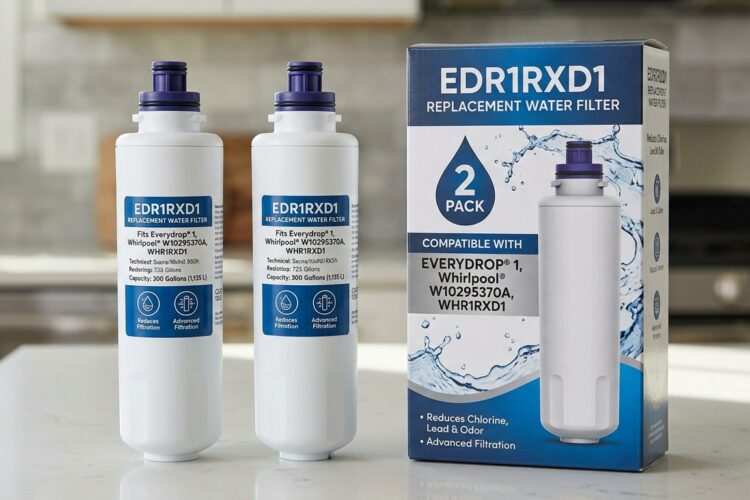
A 2-pack of refrigerator filters is really a one-year plan in a box. At the usual six-month replacement rhythm, two cartridges cover twelve months: one goes in now, one goes in at the halfway point, and the household is covered until the following year. That framing makes the listing for this product easy to understand. Its title, “EDR1RXD1 Replacement for Everydrop 1, Whirlpool W10295370A, WHR1RXD1, 2PACK,” names a replacement cartridge, three reference codes, and a quantity.
The three codes are the part of the title that causes the most head-scratching. EDR1RXD1 is the code associated with the EveryDrop “Filter 1” cartridge style. WHR1RXD1 is a code associated with the Whirlpool-branded version of the same style. W10295370A is an older-style part number that still turns up in manuals and parts diagrams. Sellers of replacement parts often list all of them so that buyers searching under any one code will find the listing. They are references to the originals that this product is designed to stand in for. They are not a statement about who manufactured the cartridge in the box.
This guide uses the 2-pack format as its organizing idea. It explains what a replacement cartridge of this kind is generally designed to do, how to confirm it matches a refrigerator, and how to build a simple twelve-month routine around two cartridges. It also covers what to look at before trusting a third-party part. To be clear about the approach, this is an informational article and not a review. No personal use of the product is being claimed, and nothing here describes a first-hand experience with it. The explanations rely on how refrigerator water filters generally work and on the details publicly listed for this product. Your refrigerator’s owner’s manual, the manufacturer’s documentation, and the seller’s own product information should always take priority over a general article like this one.
Refrigerator filters sit in an easy-to-forget corner of home maintenance. They are inexpensive next to the appliance they serve, yet they touch water that people drink, cook with, and freeze into ice. A little planning at the time of purchase makes the next year of filter changes close to effortless.
Key Features
A Replacement Cartridge, Not a Manufacturer Part
The word “replacement” in the title signals that this cartridge is designed to take the place of a specific original. In the replacement-parts market, that usually means a product made by a company other than the appliance maker, engineered to fit the same housing. That is a normal and widely used arrangement, and it is worth keeping in mind because it changes what a careful buyer should check. With a manufacturer cartridge, the appliance maker’s documentation covers fit and testing. With a replacement cartridge, the seller’s documentation and the packaging carry more of that weight.
Three Reference Codes in One Title
Each code in the title has a role. EDR1RXD1 and WHR1RXD1 both point to the “Filter 1” cartridge style, one under the EveryDrop label and one under the Whirlpool label. W10295370A is an older part number that continues to appear in service manuals and old filter packaging. Manufacturers revise packaging and consolidate product lines over time, so the same cartridge style can carry several codes across different years. That is why older manuals and newer listings sometimes disagree. The codes are search keys and clues. The reliable test is whether your refrigerator’s documentation points to the same cartridge style.
Designed for “Filter 1” Refrigerators
The “1” in these names is a fit code and not a quality grade. It identifies a particular cartridge style and the group of refrigerators built to accept it. A refrigerator that calls for Filter 1 expects this style. A refrigerator that calls for another number generally expects something different, even when the cartridges look similar. The number is a bit like a shoe size: it tells you what fits and says nothing about how good the shoe is.
Activated Carbon Filtration
Most refrigerator filters, original or replacement, rely on activated carbon. The material is porous, with an enormous internal surface area for its size, and certain substances cling to that surface as water passes through. Carbon is widely associated with reducing chlorine taste and odor, and depending on how a particular cartridge is built and tested, certain other substances too. What a specific product reduces, and how well, depends on its design and testing, so the product’s own documentation is the right place to look and general assumptions are not.
Testing and Certification Information
Replacement filters in this category are often tested against voluntary NSF/ANSI standards, which describe what a filter can reduce under controlled conditions. Whether a given replacement cartridge has been tested, and to which standards, varies from product to product. The sensible approach is to look for specifics on the listing or packaging: the named standards, the list of substances tested, and some way to verify the claim. If those details are missing, certification is best treated as unconfirmed.
Supply to the Dispenser and Ice Maker
In refrigerators designed for this cartridge style, the filter generally sits in the line that feeds the water dispenser and, in many models, the automatic ice maker. One cartridge therefore influences both the water from the door and the ice in the bin, which is part of why a worn cartridge can show up in more than one place.
Tool-Free Installation
Cartridges designed to fit this housing are typically replaced without tools, and in many refrigerators without shutting off the water supply. The motion depends on the model. Some cartridges twist, others push in and lock, and the housing may sit inside the fresh food compartment or in the base grille. The manual is the right guide for the details, and a properly seated cartridge should feel secure and line up cleanly with the housing.
The Two-Pack Format
Two cartridges per order is the other defining detail. A pair covers a full year at the usual interval, which suits households that like to buy ahead without storing a large stockpile. It also means the first compatibility check carries real weight, because a mismatch affects both cartridges.
Reminder Compatibility
Many refrigerators track filter life by time or water volume and show a reminder on the control panel, which usually needs to be reset after a replacement. Some models are also designed to recognize the cartridge installed in them. The manual explains how your refrigerator handles this and whether a replacement part is supported.
The Twelve-Month Plan
The easiest way to get value from a 2-pack is to give it a calendar. Here is a simple, general template that a household can adapt.
Day One: Match and Install
Before the first cartridge goes in, confirm compatibility. Photograph the refrigerator’s model label, look up the filter number in the manual, and compare it with the codes in the listing and on the cartridge being replaced. Once everything agrees, remove the old cartridge, seat the new one firmly, and run water through the dispenser for the amount the manual recommends. While the water runs, look around the housing for drips. Then reset the reminder indicator if the refrigerator has one.
Day One, Continued: Label Everything
With a marker, write the installation date directly on the cartridge or on a piece of tape on the housing, if the cartridge’s design allows. Write the planned date of the next change on the second cartridge’s box, roughly six months out. This takes less than a minute and does more to prevent forgotten filter changes than any reminder light.
Day Two: Check Again
The day after installation, look around the housing once more for moisture. A cartridge that is slightly off its seat can drip slowly, and a small leak behind a grille can go unnoticed for weeks. A second check costs nothing.
Month Three: A Quiet Checkpoint
Around the three-month mark, there is no need to do anything with the cartridge itself, but it is a good moment to glance at the second cartridge’s box and confirm it is stored somewhere clean, dry, and away from extreme heat or cold. If flow has slowed noticeably or the water tastes different, it may be worth moving the replacement date up.
Month Six: The Swap
When the planned date arrives or the reminder light comes on, the second cartridge goes in. Repeat the same routine: remove the old one, seat the new one, flush the line, check for drips, reset the indicator, and write the date. If the household is a heavy user of the dispenser and ice maker, or if the local water carries a lot of sediment, the swap may come a little earlier than six months, which is perfectly reasonable.
Months Seven Through Eleven: Another Quiet Stretch
With no cartridges left in the box, this is the time to add the next order to a calendar. Ordering a month ahead leaves room for shipping delays and for double-checking compatibility without time pressure.
Month Twelve: Reorder
Around the eleven- to twelve-month mark, order the next set. Because the refrigerator’s model number and the filter number haven’t changed, the compatibility check is quicker this time, as long as the photos and notes from the first purchase are still handy.
How It Can Be Used
Replacing a Cartridge on Schedule
The most common use is the plain one: replace the cartridge about every six months, as manufacturers commonly recommend, or sooner if flow slows or the reminder says it’s time. A 2-pack provides both cartridges for the year in a single order.
Covering a Full Year Without Stockpiling
A pair keeps a small spare on the shelf without taking up much storage space. For households with limited cabinet room, two cartridges are easier to manage than a larger multi-pack.
Rescuing an Overdue Filter
Many households let the reminder sit for months. A filter left in place far beyond its recommended life may be doing little more than letting water pass through. Replacing it and starting the dated routine described above is a practical way to reset.
Investigating Slow Flow
A drop in dispenser flow, or an ice maker that seems slower than usual, can sometimes point to a cartridge clogged with sediment. Replacing the filter is a reasonable first step. If flow stays weak with a fresh cartridge installed, the cause may lie elsewhere, such as a kinked tube or low household water pressure, and the manual or a service professional becomes the better resource.
Responding to Taste or Odor Changes
Chlorine taste and odor are among the more common complaints about municipal water, and carbon filtration is widely used to reduce them. If the dispenser water begins to taste flat or slightly off, a new cartridge is one of the simplest things to try first.
Starting Fresh in a New Home
People who move into a home with an existing refrigerator rarely know when the filter was last changed. Installing a new cartridge during the first week creates a clear starting point, and the second cartridge in the pack becomes the next scheduled change.
Splitting Between Two Refrigerators
Some homes have a main refrigerator in the kitchen and a second one in a garage or basement. If both are designed around the same cartridge style, a pair can serve one change for each appliance, provided each model has been checked on its own.
Gifting or Sharing With Family
Relatives with the same refrigerator model sometimes share a pack. It is a practical way to avoid ending up with an unused cartridge in a drawer, as long as everyone has confirmed compatibility with their own appliance first.
Who It May Be Suitable For
Owners of Refrigerators That Call for This Cartridge Style
The core audience is anyone whose refrigerator is designed around the Filter 1 style associated with the codes in the title. Compatibility depends on the refrigerator’s model number and the filter its manual specifies, and not on the name of the brand on the door.
Households That Follow a Regular Replacement Schedule
A 2-pack suits people who like a steady rhythm and prefer to buy once a year. It reduces the number of orders without requiring much storage.
Buyers Who Are Comfortable Reading Listings and Packaging
Replacement parts reward people who read carefully. Anyone willing to check codes, look for certification details, and inspect packaging when it arrives is well positioned to evaluate a product like this one.
People Comparing Manufacturer and Replacement Options
Some owners like to weigh both categories before deciding. A listing like this one gives them a point of comparison, as long as they evaluate it on documentation and fit and not on the title alone.
Households With Two Compatible Refrigerators
A pair of cartridges can cover a main refrigerator and a second unit, though each model needs its own compatibility check.
Renters and New Homeowners
Those who have inherited an appliance often want a clean way to reset its maintenance clock. Two cartridges with dates written on them make that straightforward.
People Who Like a Visible Maintenance Plan
For anyone who enjoys writing dates on things and keeping a household calendar, the 2-pack’s built-in twelve-month rhythm is easy to follow.
Important Things to Consider
Compatibility Comes First
Photograph the refrigerator’s model label, which is usually inside the fresh food compartment. Confirm the filter number or part number in the owner’s manual. Compare both with the codes in the listing and use the retailer’s fit checker. If the old cartridge is still installed, compare its label as well. With a 2-pack, a mismatch affects both cartridges, so thoroughness pays off.
Know What “Replacement” and the Brand Codes Mean
Phrases such as “replacement for Everydrop 1” and “Whirlpool” in the title describe fit and intended role. They do not, on their own, say who manufactured the cartridge. If origin matters to you, look for that information in the seller’s description and on the packaging instead of reading it into the title.
Read the Codes Carefully
The three codes in the title are closely related but not identical, and neighboring filter numbers in the same family differ by a single digit. Scanning quickly makes it easy to mix them up. Comparing each code against your manual one character at a time prevents most errors.
Warranty Language Deserves a Look
Owners of refrigerators still under warranty may want to read their warranty documents to see how filters from other companies are treated. The terms vary, and the manufacturer or the manual can clarify.
Check Whether Your Refrigerator Recognizes the Cartridge
Some refrigerators are designed to identify the cartridge installed in them, while others rely on a simple mechanical connection. The manual explains which applies to your model and whether a replacement part is supported.
Look for Specific Certification Details
Words like “certified” and “tested” carry more weight when they come with specifics: a named standard, a list of substances, and a way to verify the claim. If the listing doesn’t provide those details, treat certification as unconfirmed.
Inspect the First Cartridge Before Installing It
Compare it with the old one. Check the size, the connection points, and the condition of the seals. Packaging and documentation should look consistent. If anything seems off, it is reasonable to contact the seller before installing.
Check the Seller’s Return Terms
Because the purchase involves two cartridges, it helps to know what happens if the first one doesn’t fit or seems defective. A clear return policy makes the decision easier.
Watch for Leaks
A cartridge that isn’t fully seated can drip. Look around the housing while water runs and again a few hours later. A slow leak behind a grille can go unnoticed for a long time.
Flush the Line
Manufacturers generally recommend running a set amount of water through the dispenser after installing a new cartridge to clear trapped air and loose carbon particles. Skipping this step can cause sputtering or cloudy water at first. Follow the volume listed in your manual.
Reset the Indicator
If the refrigerator has a filter reminder, it usually needs to be reset after a replacement. Otherwise the light may keep showing, which makes the next replacement date harder to track.
Treat the Interval as a Guideline
Six months is a recommendation and not a deadline. Sediment-heavy water or heavy use can shorten a cartridge’s practical life, and light use can mean the date arrives early. If flow slows sooner than expected, replacing earlier is reasonable.
Know the Limits of a Filter
Carbon-based refrigerator filters can reduce certain tastes, odors, and substances, but they aren’t designed to address every water concern. Households on private wells, or those with known contamination or microbiological issues, may need additional treatment beyond a refrigerator cartridge. A water test or the local utility’s annual quality report offers more specific information than any filter listing.
Store the Spare Properly
With one cartridge waiting on the shelf for six months, storage matters. Keep it in its packaging, in a clean, dry place away from extreme heat or cold, and mark the planned replacement date where you’ll see it.
Dispose of Old Cartridges Thoughtfully
Rules for used cartridges vary by location. Some manufacturers and retailers offer recycling programs, so the packaging or the manufacturer’s website is worth checking.
Comparison of General Categories
Manufacturer Cartridges and Replacement Cartridges
Manufacturer cartridges are produced or authorized by the appliance maker and designed for specific model groups. Replacement cartridges come from other companies and are designed to fit the same housing. Quality and documentation vary widely among replacement options. Some carry their own certifications and publish detailed test data, while others offer very little. A fair comparison looks at certification paperwork, fit, seller reputation, warranty implications, and cost of ownership over time, without assuming that either category is automatically better.
Two-Packs, Single Cartridges, and Larger Multi-Packs
A single cartridge keeps the commitment small and suits a first purchase or a one-time swap. A 2-pack covers a full year at the usual interval and keeps a spare on hand without much storage. Larger multi-packs cover more time and reduce reordering, at the cost of concentrating the decision across more cartridges. Which format fits best is mostly a matter of habit and storage space.
Searching by Part Number and Searching by Model Number
Part-number searches are quick, but part numbers can overlap across years and brands, which is why this listing includes three. Searching by the refrigerator’s model number, through a retailer’s fit tool or the manufacturer’s lookup, works from the appliance side and is usually the more dependable direction. Using both and comparing results gives the best assurance.
Refrigerator Cartridges and Pitcher Filters
Pitcher filters treat water in batches and live on a counter or in the refrigerator. They are portable and independent of any appliance, but they need manual refilling and usually have a smaller capacity. A refrigerator cartridge works in line with the supply, delivering filtered water and ice on demand. The trade-off is automatic convenience versus portability.
Refrigerator Cartridges and Faucet-Mounted Filters
Faucet-mounted filters treat water at the sink and can usually be switched on and off as needed. They are easy to install and do not depend on a particular refrigerator, but they only filter water drawn from that tap. A refrigerator cartridge filters only what comes from the appliance. Some households use both.
Refrigerator Cartridges and Under-Sink Systems
Under-sink systems filter water at the kitchen tap and often use multiple stages. They can handle larger volumes and more specific concerns, but they involve installation and a separate maintenance schedule. A refrigerator cartridge is simpler and targets a single appliance. Households with broader water quality concerns sometimes use both.
Refrigerator Cartridges and Whole-House Systems
Whole-house systems treat water where it enters the home, protecting plumbing and fixtures along with drinking water. They represent a larger investment in equipment and installation. A refrigerator cartridge addresses a much smaller piece of the picture and can complement a whole-house system rather than replace it.
Filtered Tap Water and Bottled Water
Some households use refrigerator-filtered water in place of bottled water for everyday drinking. The decision depends on taste, local water quality, and convenience. Filtered tap water avoids bottle storage and disposal, while bottled water may be preferred for travel or by people who like a specific brand.
Frequently Asked Questions
What do the three codes in the title mean?
EDR1RXD1 and WHR1RXD1 are codes associated with the “Filter 1” cartridge style under the EveryDrop and Whirlpool labels, and W10295370A is an older part number that still appears in manuals and parts diagrams. Listings often include all three so buyers searching under any of them can find the product. They describe the originals this cartridge is meant to replace, and they do not say who made it.
Is this a Whirlpool or EveryDrop filter?
The title describes it as a replacement for those filters, which refers to compatibility. Whether the cartridge was made by the appliance maker is something to confirm in the seller’s description and on the packaging.
How do I know it fits my refrigerator?
Start with the refrigerator’s model number, then check it against the listing’s compatibility information, the retailer’s fit checker, and your owner’s manual. If possible, compare the codes with the label on the cartridge you’re replacing.
How often should I replace the filter?
Manufacturers commonly recommend about every six months, or sooner if flow slows or the reminder says it’s time. Water quality and usage can shift the ideal timing.
Why does the pack contain two cartridges?
At the usual six-month interval, two cartridges cover a year. It’s a convenient quantity for households that like to buy ahead without storing a large number of spares.
Could a replacement filter affect my warranty?
It depends on the manufacturer’s terms and how the warranty is written. Reading the warranty documentation, or contacting the manufacturer, is the most reliable way to find out.
Does my refrigerator need to recognize the filter?
Some models are designed to read information from the cartridge, and others rely on a simple mechanical connection. Your manual explains how your model works.
Is the filter certified?
That depends on the specific product. Look for named standards, a list of substances tested, and a way to verify the claim on the listing or packaging. If those details aren’t provided, treat certification as unconfirmed.
Do I need tools to install it?
Cartridges of this type are generally designed for homeowner replacement without tools, and in many refrigerators without shutting off the water. The manual provides the steps for your model.
Why is my water cloudy after installing a new filter?
Trapped air and loose carbon particles are the usual causes. Running water through the dispenser for the amount your manual recommends normally clears it up.
What if the cartridge leaks?
If needed, turn off the water supply to the refrigerator, remove the cartridge, confirm it’s the correct type, and reseat it following the manual. If it still leaks, contact the seller or the manufacturer before continuing to use it.
Does a refrigerator filter remove everything from water?
No. Carbon-based filters reduce certain substances but aren’t designed to treat every concern. A water test or your utility’s quality report can help you decide whether additional treatment makes sense.
What should I do with the old cartridge?
Disposal options vary by location. Some manufacturers and retailers offer recycling programs, so the packaging or the manufacturer’s website is a good place to check.
Conclusion
The EDR1RXD1 replacement 2-pack is a simple idea with a clear rhythm: two cartridges, two changes, one year. Its title lists three reference codes to help buyers find it, and those codes describe the originals it is designed to stand in for. What they leave open, who made the cartridge, what it was tested for, and how it interacts with a particular refrigerator, is exactly what a careful buyer can answer by reading the listing, checking the packaging, and consulting the owner’s manual.
The practical routine is short. Photograph the model label, confirm the filter number, compare it with the codes in the listing and on the old cartridge, and look for specific certification details instead of general claims. Install the first cartridge firmly, flush the line, check for drips twice, reset the reminder, and write the date. Store the second cartridge somewhere clean and dry with its planned date marked on the box, and put the next order on the calendar for around month eleven. A refrigerator filter is one small part of a household’s wider water picture, and keeping realistic expectations about what it can and can’t do makes the whole routine easy to manage.